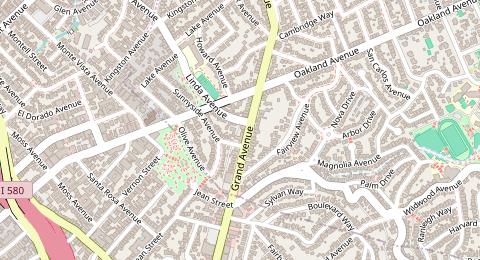
Fresh data Map updated 2026-07-03
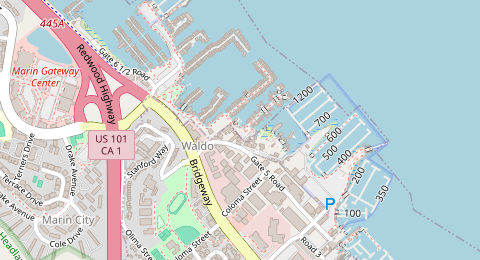
Linda Avenue, San Francisco
16 km from San Francisco centre
San Francisco parking is highly block-by-block: SFMTA meters, residential permit zones, color curbs, street cleaning signs, steep hills, and event rules can all apply on the same trip. Likely free street parking is generally easier to search for in outer residential areas and park-edge neighborhoods than in Downtown, SoMa, Fisherman’s Wharf, or around major venues. Use the map to shortlist candidate blocks, then confirm the curb, signs, and Street View before navigating.
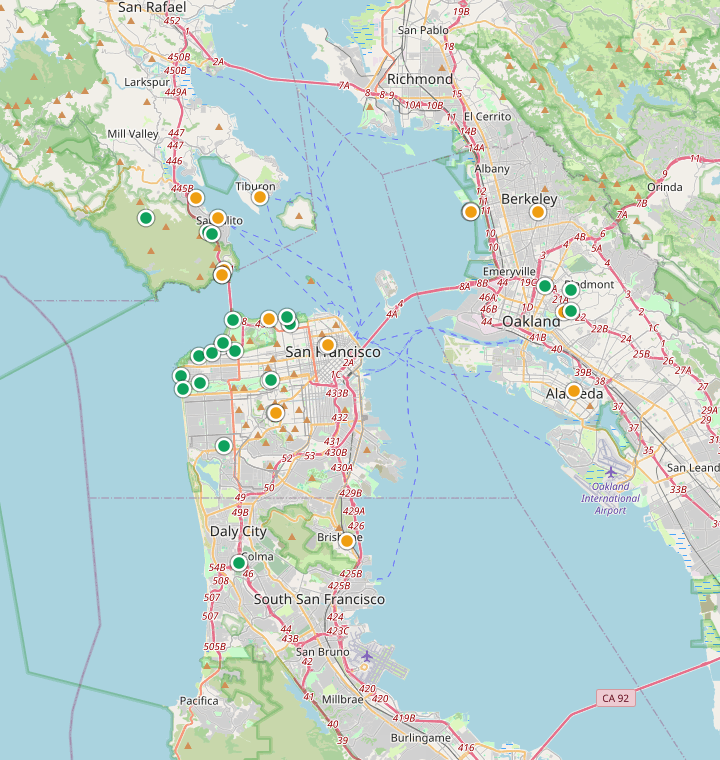
These candidates come straight from the latest community map data, ranked freshest first. Each one links to Street View, Google Maps directions and Google Maps so you can verify the signs before you drive. The last map update is shown for every spot.
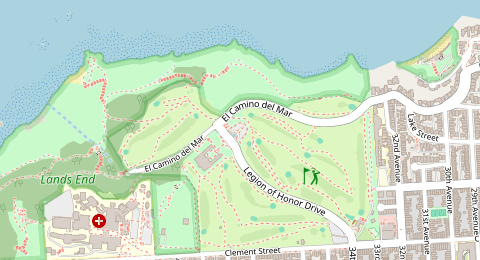
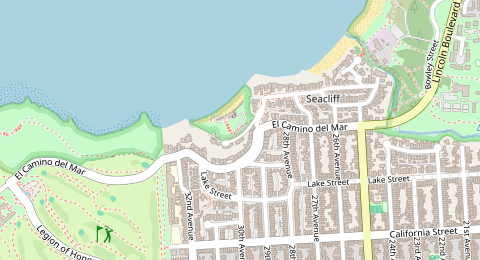
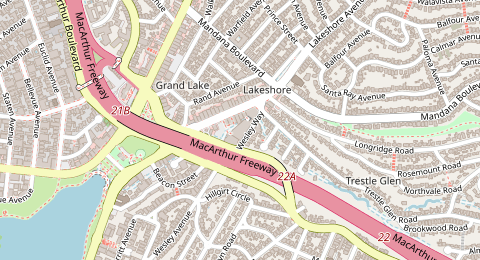
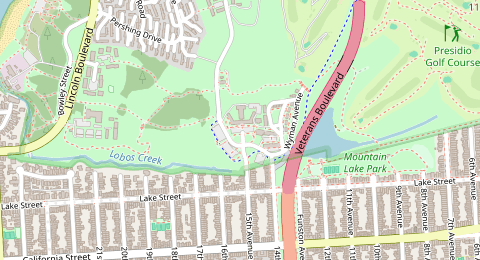
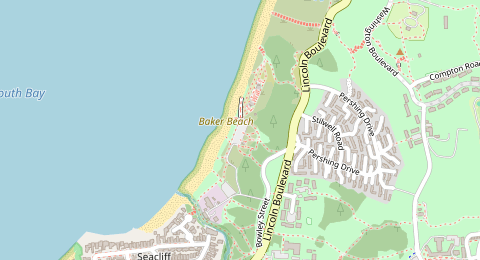
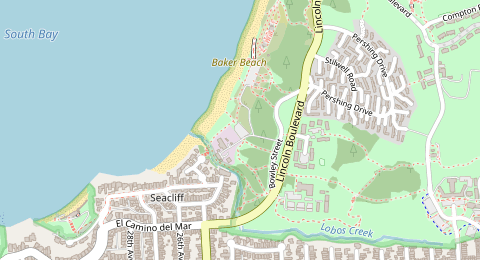
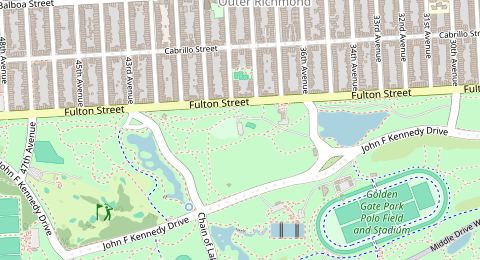
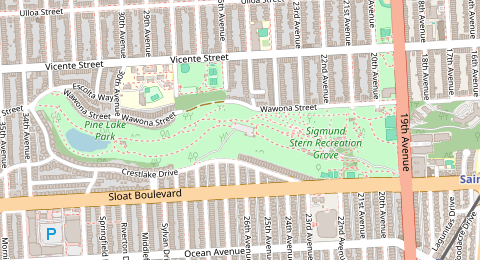
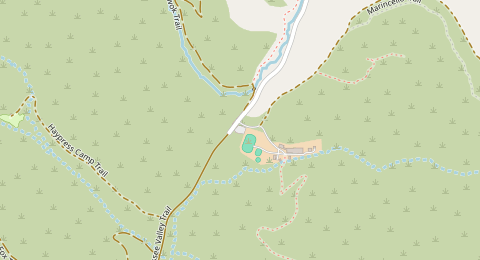
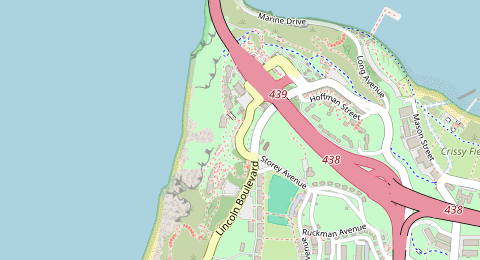
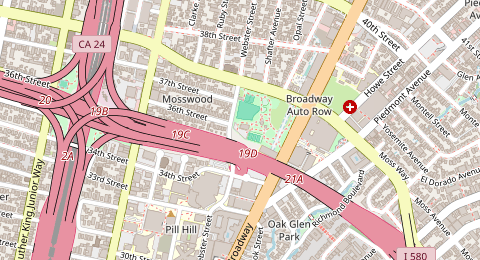
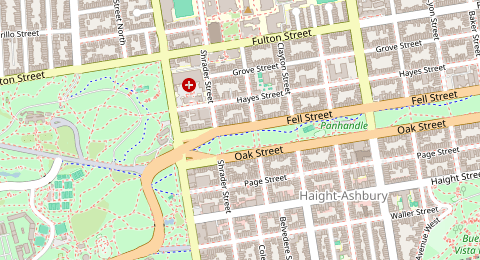
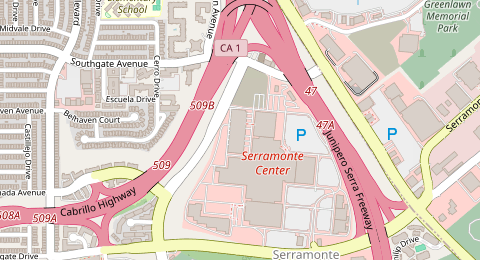
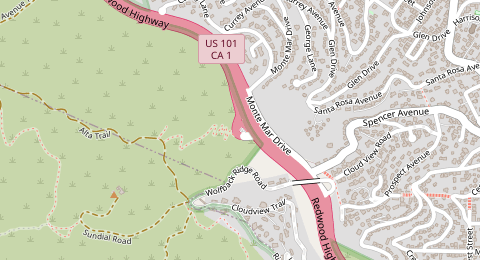
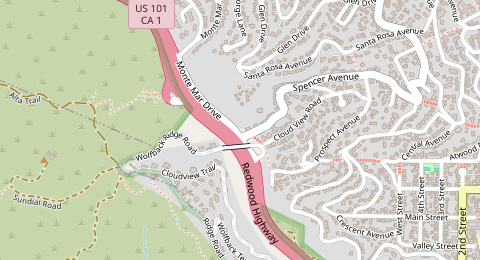
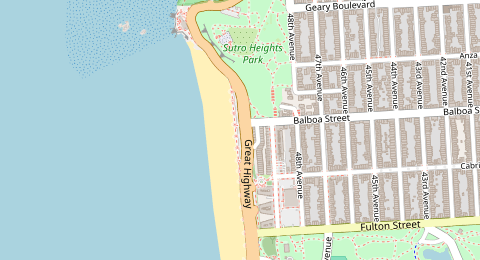
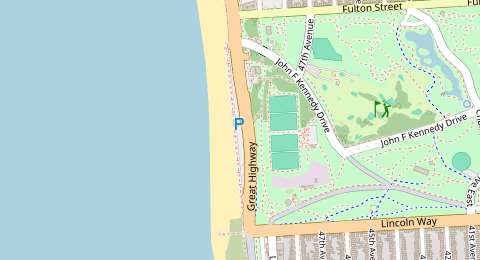
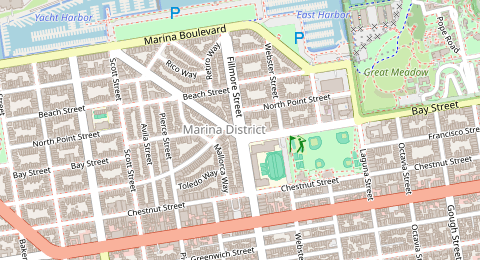
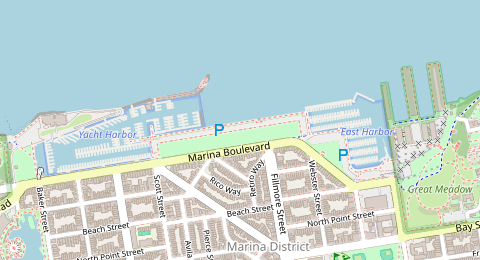
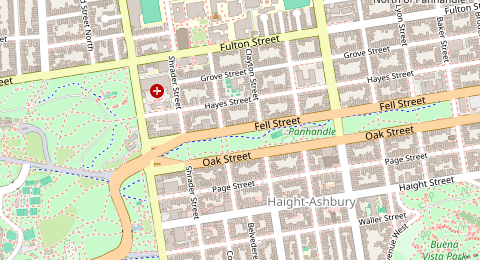
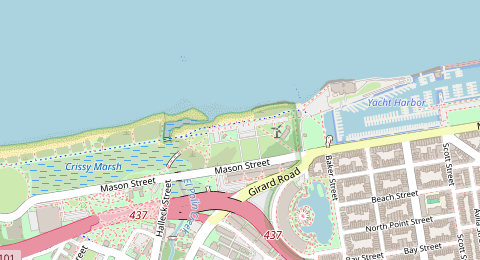
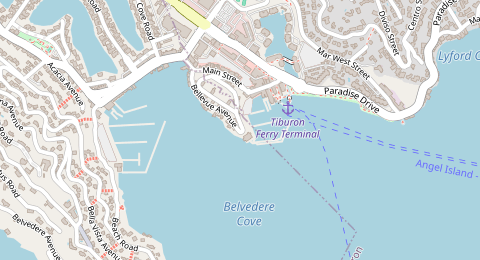
Spots are likely-free candidates based on OpenStreetMap data, not a guarantee. Parking rules change by street, side and time — always confirm the signs on arrival.
113 probable free parking candidates are available on the San Francisco map, including 21 fresh, 18 medium-fresh and 74 older data points. Open the map to compare candidates visually, then use Street View and Google Maps navigation from each marker.
San Francisco’s curb parking is managed intensively because demand is high in commercial districts, tourist areas, transit corridors, and dense residential neighborhoods. SFMTA uses meters in many high-demand areas, residential parking permit areas to manage neighborhood parking, color curbs for loading and access, and enforcement around street cleaning, tow-away zones, and events. For likely free parking, the best approach is to search beyond the central and waterfront core: outer west-side residential grids, parts of the southern neighborhoods, and some park-edge areas may offer better chances, but every block still needs sign verification. Downtown, SoMa, Union Square, North Beach, the Mission, the Embarcadero, Fisherman’s Wharf, Mission Bay, and venue areas near Oracle Park and Chase Center should be treated as high-control areas where meters, loading zones, garages, or special event rules are common.
These are practical starting points for finding likely free parking in San Francisco. Use them as a shortlist, then verify signs on Street View and on arrival.
These west-side residential grids are farther from the downtown and waterfront parking core and can be good places for the map to surface likely unmetered curb candidates, especially away from Irving, Noriega, Taraval, school frontage, and busy Muni stops.
Verify: Check for street cleaning signs, driveway cuts, daylighting at corners, and any RPP or short-term signs before relying on a space.
North of Golden Gate Park and west of the denser inner neighborhoods, residential blocks may be worth checking for likely free curb parking when visiting the park, Ocean Beach, or west-side destinations.
Verify: Stay alert near Geary, Clement, Balboa, park entrances, schools, and commercial corners where meters, loading, or time limits may appear.
San Francisco Recreation and Park lists street parking throughout Golden Gate Park and specific vehicle access routes, including west-side entrances and routes to areas such as the Polo Field and Beach Chalet. These areas can be useful for park visits when open spaces appear on the map.
Verify: Verify current car-free routes, event closures, pay signage, and posted limits; do not assume park street parking is always free or always accessible.
These southern residential neighborhoods are outside the main downtown parking pressure zone and may provide better candidate blocks for drivers willing to combine parking with Muni or BART for the final leg.
Verify: Avoid assuming spaces near Mission Street, Geneva Avenue, Ocean Avenue, Balboa Park Station, or shopping blocks are unrestricted; check signs carefully.
Southeastern San Francisco has a mix of residential, industrial, and waterfront-edge streets where longer curb segments may appear on the map away from the busiest commercial blocks.
Verify: Check for truck loading zones, industrial no-parking signs, construction restrictions, street cleaning, Port-related rules, and safety before leaving the vehicle.
If your destination is central San Francisco, it can be easier to search for a likely free curb space farther out and use Muni or BART rather than circling downtown streets.
Verify: Do not treat BART station lots, SFMTA garages, private lots, or paid park-and-ride facilities as free street parking; use the map only for legal curb candidates and verify signs.
In these parts of San Francisco, free parking is less likely or the rules may be more complex.
These areas have heavy curb demand, meters, garages, loading zones, hotel zones, tow-away rules, and construction or event signage. Free curb parking is less likely and often time-limited.
Tourist and waterfront areas have high demand and SFMTA notes Sunday meter operation in locations including Fisherman’s Wharf and the Embarcadero. Always check the meter and signs.
SFMTA uses special event meter rules around Oracle Park and Chase Center during events. Temporary tow-away signs and congestion can make nearby curb parking risky.
Dense blocks, steep grades, narrow streets, driveways, RPP zones, and commercial loading activity make sign reading and hill parking rules especially important.
The Presidio and bridge visitor areas are managed separately from ordinary city curb parking in many locations, with paid or regulated visitor parking. Do not assume former free lots are still free.
Popular neighborhood commercial corridors often combine meters, loading zones, parklets, short-term spaces, RPP side streets, and frequent turnover demand.
FreeParkMap is built around verification. Open a candidate spot, check the street visually, then confirm the nearest signs when you arrive.
This page and map show likely free parking candidates, not guaranteed spaces. Always verify current street signs, curb paint, meters, temporary notices, and local rules before leaving your vehicle.
FreeParkMap is a discovery tool. It helps you build a shortlist of possible places to check, not a guarantee that a space is legal or free.
The page is designed for one simple workflow: discover, verify, navigate, then check signs on site.
Search San Francisco on the map and zoom into outer residential or park-edge areas near your destination.
Open likely parking candidates and compare map confidence, data freshness, and nearby restrictions.
Use Street View to inspect signs, meters, curb colors, driveways, street cleaning, and crosswalk clearance before you drive.
Navigate with Google Maps, then verify the actual curb and current temporary signs before leaving the car.
Quick answers before using the map.
Yes, free street parking can exist, but it is never guaranteed. Many spaces are controlled by meters, residential permit rules, street cleaning, color curbs, or temporary tow-away signs, so you must verify the exact block.
Likely free curb parking is generally more worth checking in outer residential areas such as the Outer Sunset, Parkside, Outer Richmond, parts of Excelsior, Mission Terrace, Crocker-Amazon, and some southeast neighborhoods. Avoid assuming this applies near commercial corridors, schools, transit stations, or events.
Not always. SFMTA notes that some meters operate on Sundays, including areas such as Fisherman’s Wharf and the Embarcadero, and special event areas may have different rules. Always check the meter and signs.
Golden Gate Park has official street-parking areas and vehicle access routes, but car-free streets, event closures, garage rules, and posted payment signs can change what is usable. Treat park parking as a candidate area, not a promise of free parking.
RPP means Residential Parking Permit. If you do not have the matching permit area, you may be limited to the posted time or prohibited during certain hours. Check the area letter and the exact sign language.
Where no other posted restriction applies, San Francisco still has a 72-hour maximum rule for regular passenger vehicles. Street cleaning, RPP limits, meters, and temporary signs can require you to move sooner.
These notes explain which public information sources were used to make this page more specific.
Meter rules, variable hours, Sunday meter areas, special event meter context, payment methods, and time-limit cautions.
City meter coverage context and reminder that metered areas should not be treated as free curb parking.
RPP concepts, permit-area signs, and the need to verify residential time limits.
Residential permit area map reference for block-level permit checking.
Color curb meanings, active hours, loading zones, accessible zones, and curb-paint verification.
Crosswalk daylighting rules and corner-clearance cautions under California AB 413.
Heading somewhere else? Check likely free parking maps for more cities.
Review likely free spots, inspect signs with Street View, and open Google Maps navigation when a location looks worth trying.
Open San Francisco map →